Not caught up? Read Episodes 1-8 here.
The number one question I got asked by anyone I’ve met in the past two months is “why Denmark?” I can’t believe I haven’t written about that yet! I’ve been so busy writing about all my fun adventures that I couldn’t possibly fit it in. Well, lucky for you this past week hasn’t been too eventful, so now is the time to give you the full story of how my family ended up in this tiny but extraordinary country.
If you haven’t read “Episode 1: Leaving a life behind,” I suggest you do that, it’s important context. After Trump won the 2024 election, we knew we had no hope of a peaceful future in the US. Nobody took us seriously back then because they didn’t think it would be that bad, but we knew. I come from a line of travellers, often victims of persecution and an oppressive government. My great-grandmother died in the Holocaust, and my parents grew up in Soviet-controlled Hungary, then became victims of America’s dysfunctional immigration system. They came to the US in 2000 because my dad was working two jobs and my mom was working three just to get by. They wanted children and couldn’t start a family because they were under so much stress. My dad’s sister lived in the Boston area so they decided to make a drastic change and move. After about two to three months, things calmed down and they got pregnant with my sister. I came into the picture about six months after she was born– I was very much a surprise but at least I was a happy one.
Don’t get me wrong, it’s not a bad life I left behind. When I close my eyes I get flashbacks to all the streets I’d walk down every day, my favorite trails and my friends’ rooms. I miss Cape Cod potato chips and PureLeaf iced tea. I miss the bunnies that crowd my neighbors’ front yards in the summer, and I miss the mountains around Lake Champlain. I knew I couldn’t stay in my hometown forever, but I also knew that to set out for something better means leaving even the most beloved places, faces and routines behind.
So step one was leaving the States. Step two was deciding where to go. As EU citizens, we had a handful of countries to choose from. The most obvious choice was to go back to Hungary. My sister studied abroad in Budapest for a full semester and I was able to visit for about a week. Everyone in my family has at least visited Hungary, we all speak the language, and we still have friends and family over there. Additionally, we would be able to go quite far with our savings for the first few months because of the currency conversion rate. On the other hand, we’d have a lot of trouble finding housing and jobs. Rent prices are incredibly high and so is the unemployment rate. Healthcare is also an issue– Boston has some of the best hospitals and medical equipment around, and after 25 years my parents finally scored free surgeries and medications. We would struggle to find effective and speedy treatments for my dad’s heart and my mom’s foot. Lastly, Viktor Orbán is the prime minister, so we’d be going from one oppressive government to another. As my mom always says, “csödörbõl vödörbe,” meaning “from a barrel to a bucket.”
Out of 27 EU countries, we could cross quite a few off the list right away, Hungary included. Originally it was my suggestion to leave the States and move to Europe, and my first idea was the Netherlands. It’s a freedom-loving country on continental Europe, with a culture that loves cheese and a good time. They’re very eco-friendly with great public transit and even better healthcare. I haven’t mentioned this before, but I have TMJ, chronic jaw pain that came from orthodontic trauma. I had an overbite as a kid, and once I got my braces off, my jaw kept locking and popping. Now I can’t even bite into a sandwich and yawning is agony. My chronic pain made me eligible for a medical cannabis license in Massachusetts, and thus I became a bit of a connoisseur. I studied the history of medical cannabis, the criminalization and legalization of it, the drug war, all of that. It’s something I don’t often talk about, but it’s one of my nerdiest qualities and it makes me quite the hippie. My dad also benefited from medical cannabis, using CBN gummies to help him sleep. My ideal home country would be one that shares my values around cannabis, and that was the Netherlands. I wouldn’t have to let go of a sub-culture I know and love, and I would even have the chance to build a future in the industry.
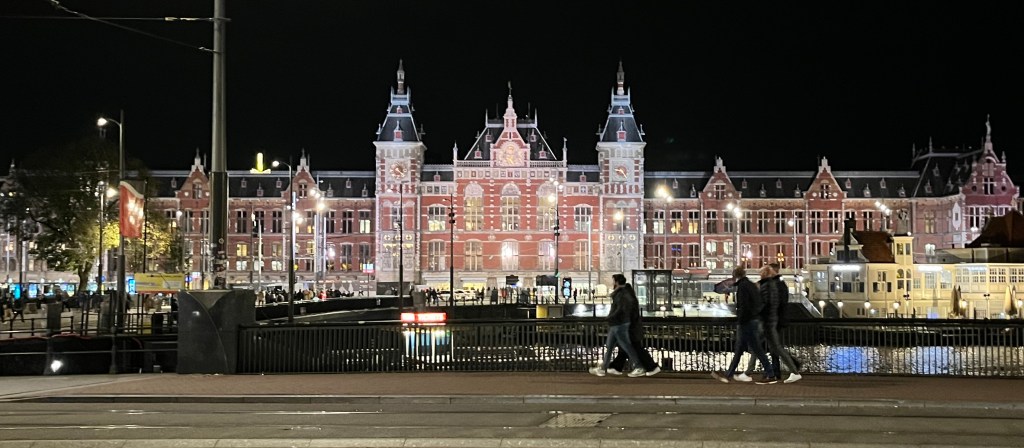
I have one or two friends from the Netherlands, and my dad also knows someone who lives there. We talked to our connections and determined that it isn’t the accommodating utopia we thought it was. Without a job, you can’t get housing. Without housing, you can’t get a job. Without a network, you can’t get either. Maybe a single person could work around it and succeed, but a family of four would have an incredibly hard time getting an affordable 3-bedroom apartment. There’s a housing crisis and a migrant crisis, not to mention a language that sounds almost extraterrestrial (no offense to any Dutch person reading this). My dad’s connection told us to look into Scandinavia, so the search continued.
We then landed on Denmark. It’s the only Scandinavian country that’s on continental Europe even though Copenhagen is on a different island. It’s well-known as the second happiest country in the world, just after Finland, and it is the first country to be fully carbon-neutral as of this year. Denmark is quite comparable to the Netherlands because it’s very bike-centric and green, it’s very dark in the winter, the entire country is completely flat, and the language is insane. And that’s coming from someone who knows Hungarian and English, both insane languages.

What sets the two countries apart, though, is that there’s no housing shortage in Denmark, and as you go further out from the city the rent prices get significantly lower. Unemployment rates are very low and the government works for the people. The tax rates are high, sometimes almost half your paycheck, but you see that money come back to you in the infrastructure and social benefits that are there to serve you. Free healthcare, free language classes (with deposit) for recent immigrants, and a considerable amount of government funding for students and unemployed people. The average person is also very happy with the royal family– the biggest drama is the queen messing up her speech cards because she’s been getting on in years. Also, while cannabis remains illegal, the Alternativet political party is advocating for legalization of state-controlled cannabis.

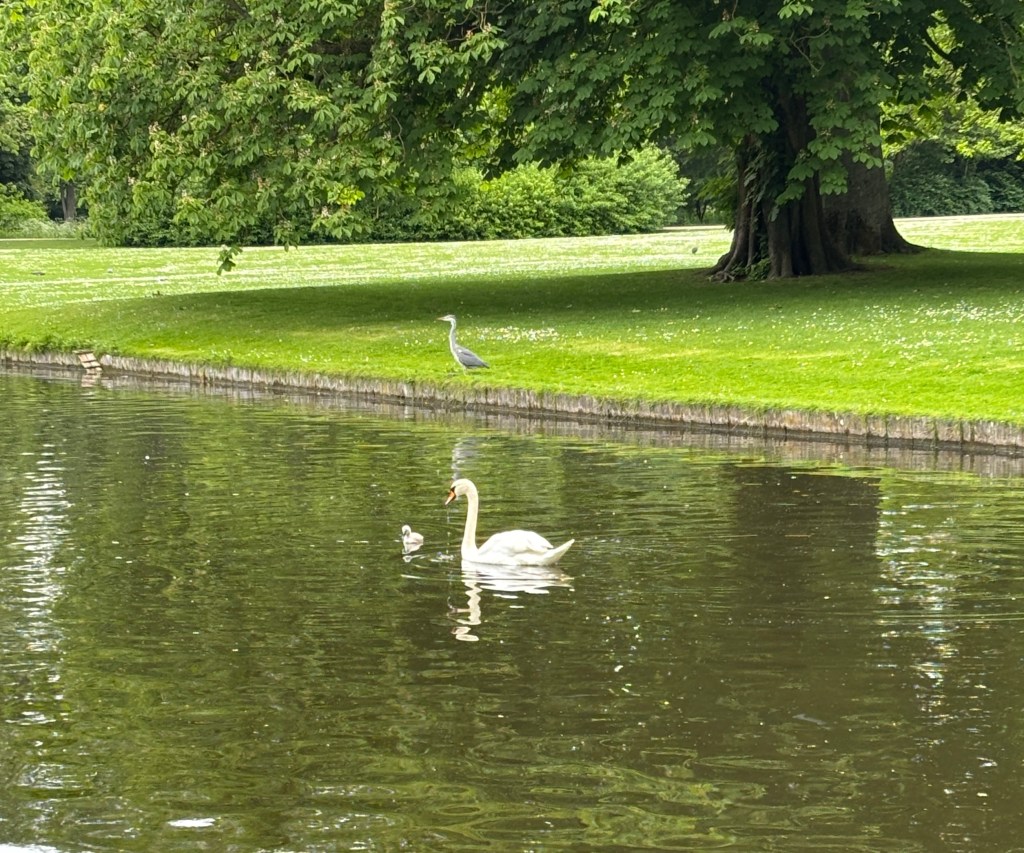
The only reason my family was able to integrate seamlessly into this country was because of our EU citizenship. While I would encourage all of my friends to join me here, it’s very hard to do without an EU passport. It’s also important to be adaptable to new ways of life– for example, the American mentality is often “why would I walk if I can drive?,” but it would need to shift to “why would I drive if I can walk?” In the professional world, there are strong values around teamwork as opposed to independence and individuality. Also, while America has this eagle-screeching RAM truck commercial to describe its sense of nationalism, Denmark has the mute swan, Carlsberg pilsners, and glorious old castles.
You obviously don’t have to agree with my views and opinions. I write this blog to tell you my story and the context behind my worldview, not to create a separation between myself and the friends and family that read it. I’d love to hear what you make of all this, so please like, comment and subscribe.
 vivi torontali
Leave a comment